



Do you want to download the entire article? With the PH+ flat rate you have unlimited access to over 2,000 articles. Order now
More scope, maybe an apartment of your own? When she sat alone on the subway afterwards, her life “shattered into two pieces”: the one before the separation and the one after.
The journalist processed the pain of being abandoned Vogue-columnist in her book Notes on Heartbreak. She vividly describes her torment after the unexpected end, as if “a tarantula was using my body as a nest.” A tarantula that keeps trying to “crawl up my esophagus to sit at the bottom of my throat. When I try to swallow it, it immediately comes back up with its eight legs.” Annie Lord cries so much that she feels like she’s had a bad case of the flu. Ironically, she gives in to self-pity: She shed so many tears that at some point she would be able to paddle across her bedroom.
Exaggerated? Melodramatic? Perhaps. But basically the young woman is experiencing normal heartache. A phenomenon that the German language trivializes with the word “Kummer”. The English one lovesickness it’s much better. Because the grief of having to give up a loved one can feel like a serious illness.
A serious, sometimes existential crisis
The psychiatrist Henrik Walter, at the Charité Berlin in the research area Mind and Brain active, initially considers this form of mental depression to be something positive, as it is “a valuable characteristic of the Human condition“that shows the ability to love and the longing for connection,” as he says. At the same time, he admits: “For many of those affected, lovesickness means a serious, sometimes existential crisis, which is accompanied by symptoms that are in no way inferior to depression and which can lead to suicide.”
That’s why the experts are surprised that people with broken hearts “are often not taken seriously enough by us psychiatrists, but also by society.” He is amazed that there is so little research on the topic and that many conclusions are “on shaky ground”. He observes in daily practice: “Lovesickness is usually filed under the category of adjustment disorder, which includes everything that causes mental problems but cannot be clearly assigned to depression or anxiety disorder.” And although heartbreak can feel “really dramatic and unbearable, people often say that he or she just has psychosocial problems. But for people, especially younger people, who suffer from it, that is the worst possible reaction.” Walter refers to an older study from Switzerland that looked at suicide attempts among people under 25: There, romantic rejection was the most common reason for a third of the females and a fifth of the males.
85 percent of your free time is spent ruminating
But what about the great pain that the end of love can cause? Why does it even exist, what is it good for? And why is he howled at thousands of times in cheesy songs and doctored up in maudlin films, but at the same time only rarely examined by researchers and often laughed at by those around the lovelorn?
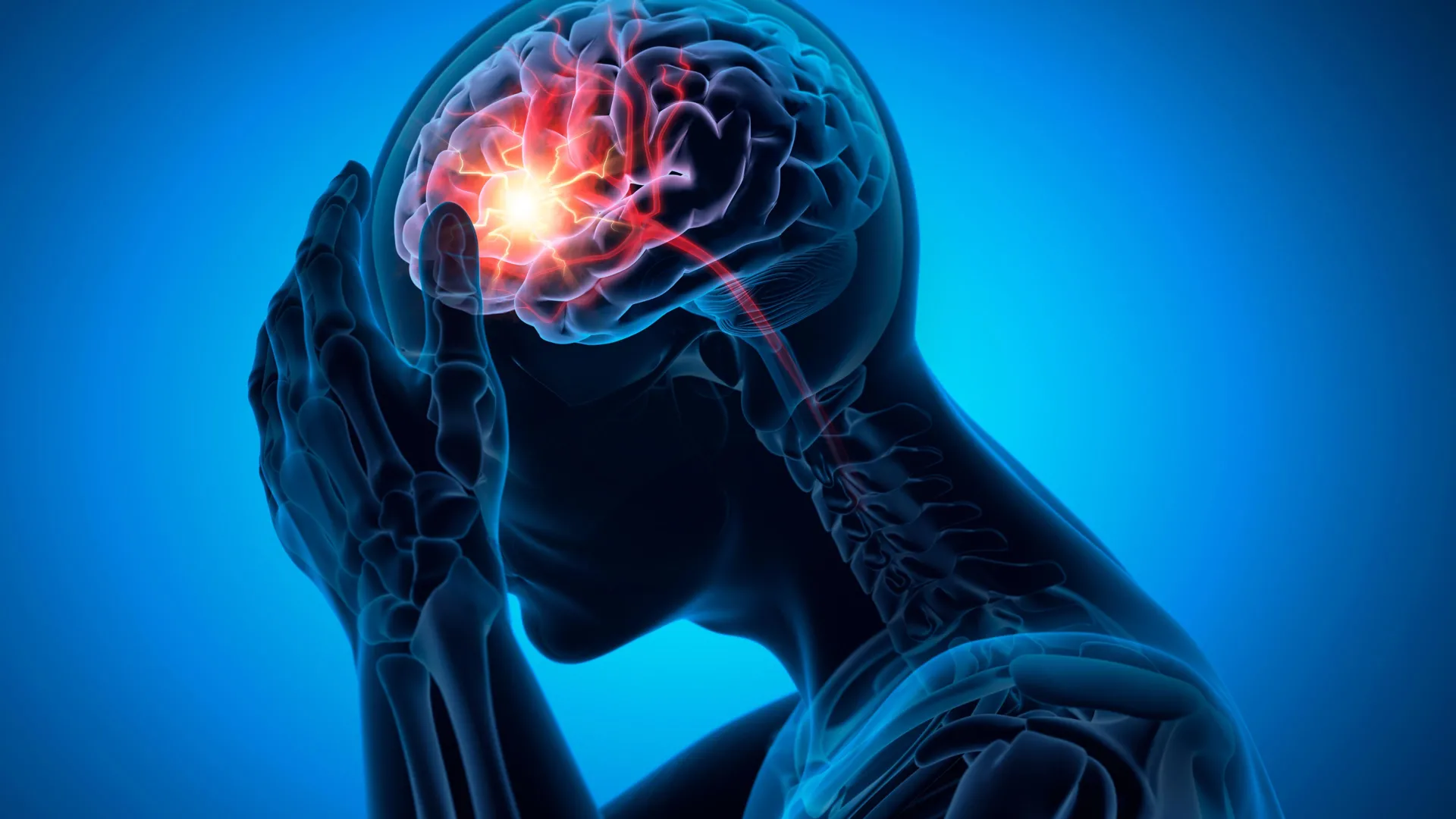
The late US anthropologist Helen Fisher assumed that the state of emergency that disappointed love puts us in is anything but harmless. Back in 2010, she undertook a study with 15 people who had recently left. They said they spent up to 85 percent of their waking hours thinking about the renegade person. Many reported inappropriate behavior: embarrassing appearances at each other’s jobs or homes, and begging by phone or email to get back together. She placed these lovesick women and men in the brain scanner and had them look at a picture of their past love. Parts of the brain that are also typical for falling in love were activated. The romantic feelings were apparently still present or even heightened despite the grief.
Love is a drive
On the other hand, the same areas of the brain that also play a crucial role in drug addiction were active. The so-called dopaminergic system triggers strong cravings. If the dose is missed, a lovesick person is like an addict in withdrawal. The anthropologist concluded: Love is actually not an emotion, but a drive that makes us focus on a specific partner. A drive that is even “significantly stronger than the sex drive,” as Fisher noted in an essay. Romantic feelings and a hunger for connection arose ages ago to enable our DNA to have a future. The intense emotions we experience during a breakup are therefore triggered because reproduction is in danger.
Henrik Walter also sees the so-called separation stress ultimately a survival instinct. An alarm signal that reminds us that we need closeness and love, that being alone can be life-threatening for us. The German neuroscientist Anne Freier summarizes in her book Science of Breakup: “We are social creatures, we need each other. With this pain, evolution wants to tell us: ‘Get up and look for someone new!'”
The social psychologist Naomi Eisenberger from the University of California was able to show in the early 2000s that the same brain regions are activated in social pain caused by rejection and in physical pain. In other words, social pain is genuinely felt pain. When we break something or get a cut, the same sirens that go off when there is a loss of connection or unfulfilled longing go off in our bodies.
Broken heart – a syndrome
“When someone leaves us, it’s like losing a body part,” explains renowned neuroscientist and psychologist Lisa Feldman-Barrett from the Northeastern University in conversation in Boston. In her theory of constructed emotions, she assumes that feelings fundamentally show us whether our so-called body budget is in balance or whether we are missing something: “When we are with someone, our brains start to vibrate with each other, they regulate each other. In this respect, with a relationship we not only lose security and reliability, but also the partnership organism.”
So the torment after the end is rarely the pettiness that it is often dismissed as by those around you with an annoyed shrug of the shoulders. Medicine has long since recognized that grief can be so severe that it damages the heart. Cardiologists are increasingly admitting that the image of a “broken heart” is not a romantic exaggeration but a clinical fact. In the so-called broken heart syndrome, a large amount of stress hormones causes a sudden heart muscle disease, which can even lead to a heart attack. The cause is almost always: high emotional stress, the death of a partner or a separation. A study from Denmark confirmed that men between 30 and 65 have a 25 percent increased risk of a heart attack in the year after a separation, and for women the risk is even 45 percent higher. And the British biostatistician Karl Pearson found a startling coincidence in his search for the connection between love and death in cemeteries: on gravestones at the turn of the century, wives and their husbands often died within a year of each other.
Diagnosis: “Divorce diabetes”
The US science journalist Florence Williams experienced a break with her partner after 25 years of marriage as a severe fall. He had fallen out of love, while she had held on to the old-fashioned “love of her life” without much doubt. Although many things in the relationship were no longer going well and the couple had also tried one or two therapeutic interventions, her body reacted to the separation “like a child gone wild at the supermarket checkout.” She lost weight dramatically, could no longer sleep, and a blood test revealed that Williams had suddenly developed a precursor to type 1 diabetes. She speaks of “divorce diabetes”: The stress of love had apparently sabotaged insulin production to such an extent that blood sugar levels skyrocketed.
In her book Heartbreak tells Williams about her efforts to get over the breakup. She throws herself into an affair that isn’t good for her, escapes into nature and meets experts like Helen Fisher, who comfort her with the words: “Child, I feel so sorry for you. But at some point it happens to everyone. It doesn’t matter whether you’re 18 or 78.” Neuroscientist Zoe Donaldson explains to Williams why heartbreak can last for a very long time. Donaldson conducts research in her laboratory at the University of Colorado lovesick prairie voles. The rodents are just as monogamous as humans and remain loyal to one partner for 75 percent of their short lives. They prefer to cuddle and touch each other all day to produce as much oxytocin as possible. If you separate them from each other, “sadness” and a “demanding behavior” to get the lost half back set in.
Unfollow or meet again
Using sensors, Donaldson and her team were able to observe strong dopamine release in the so-called nucleus accumbens of the abandoned voles as they tried to get to their partner. The brain region is associated, among other things, with emotional learning. Positive memories of the respective partner seem to be stored there, which motivate people to stay together. Interestingly, this neurochemical relationship crumbled over time. After a four-week separation – an eternity for prairie voles – dopamine release was significantly lower when the couple met again. The voles had apparently gotten over the separation.
People tend to hang on to their exes for a lot longer, especially if they are constantly reminded of them: “It’s extremely difficult for young people in particular these days because they keep meeting or following each other on social media. It’s a bit like waving the bottle in front of an alcoholic. You can’t do that,” says Henrik Walter. But what helps against heartbreak? Talking about it, giving yourself time. Walter advocates coming to terms with your own concept of love, even if that requires a lot of strength and will. “What do I miss most now? What was really there? What couldn’t I give myself? Where can I find comfort beyond a partnership? Asking questions like this can initiate an enormous learning process,” says Walter. On the other hand, anyone who represses it and rushes into the next relationship runs the risk of “things going wrong again next time.”
In the best case scenario, it is even possible to view heartbreak as a valuable phase, as the specialist in psychiatry and psychotherapy Eva Kalbheim says: “Let’s forget for a moment the Stone Age idea that heartbreak was originally intended to ensure our survival. For us modern people, it offers a great opportunity to get to know ourselves better. To find out something about our ability to bond, longings, false expectations, our patterns, our self-worth.”

